Abstract
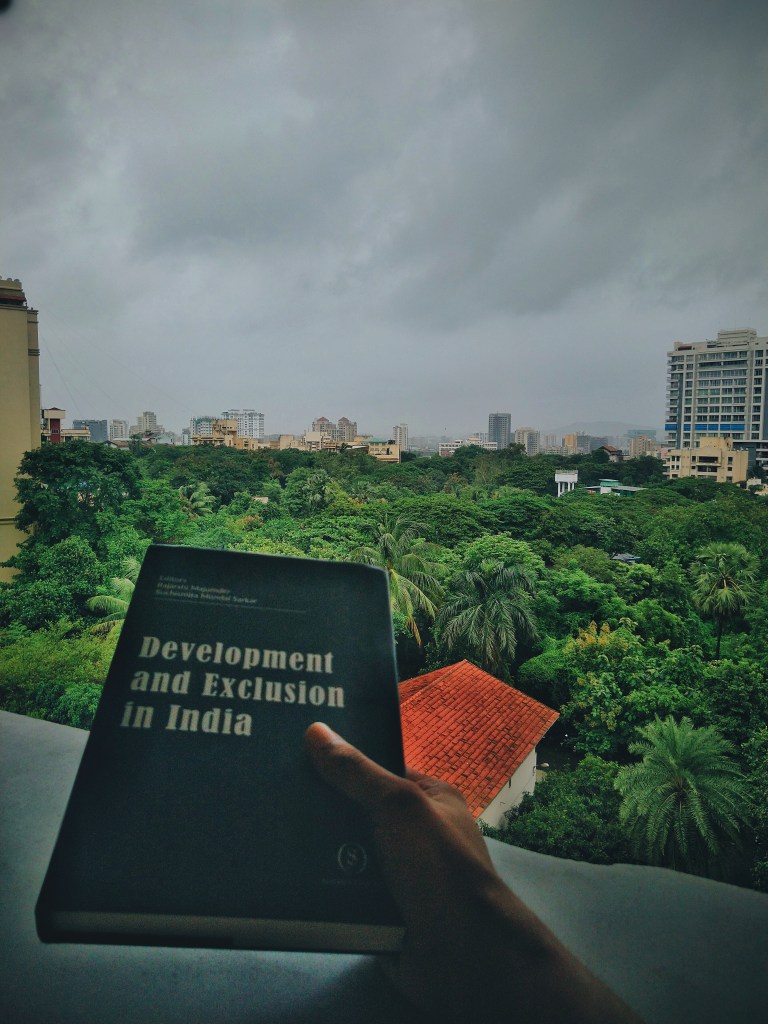
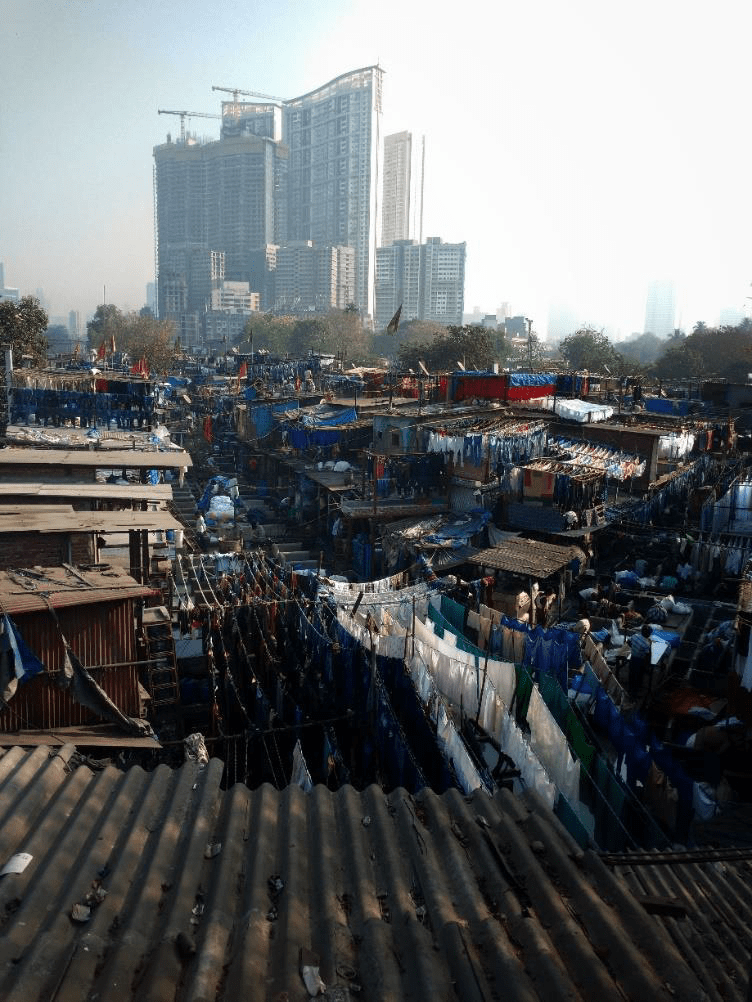
Taken from the 7th floor of TISS Mumbai, the picture shows the privileged position we sit at while discussing the development and exclusion in India. The discussion on the topic of exclusion has become a talk of the day now. With this essay we will take a visual journey of how the state failure has led to cynicism in the rural people, making villages, as described by Jonathan perry as “waiting rooms”.
The literatures have very often mentioned the push and pull factors of the cities attracting a large number of rural populations towards it, but it has rarely tried to figure out the transition of the state with the people moving from the village to a city. People living in the villages very often feels that they are being neglected by the state and move toward the cities, getting attracted by its dazzling skylines. Through this essay we will try to visualize the state dynamics in different geographies by tracing an example of a migration from a village toward the city, but ending up in the slums. We will try to figure out “How does migration change the relation of an individual with the state?”
Over 2500 years ago, Plato has observed that any city irrespective of its size, is divided into two, one the city of the poor, and the city of the rich. This is true even in the contemporary times. There is an ongoing debate whether cities make people poor or it attracts poor people. To some extent, it is true that the proliferation of slums is a result of poor urban planning and the ignorant nature of the state. The people living in the villages believe that moving to a city is the best way to escape their poverty but we will see that even after travelling a horizontal distance of thousand kilometres, they failed to travel the vertical distance.
“The country that is more developed industrially only shows, to the less developed, the image of its own future.”
~Marx, Preface to the German edition of Capital (1867)
The Aspirational Story of Chatra
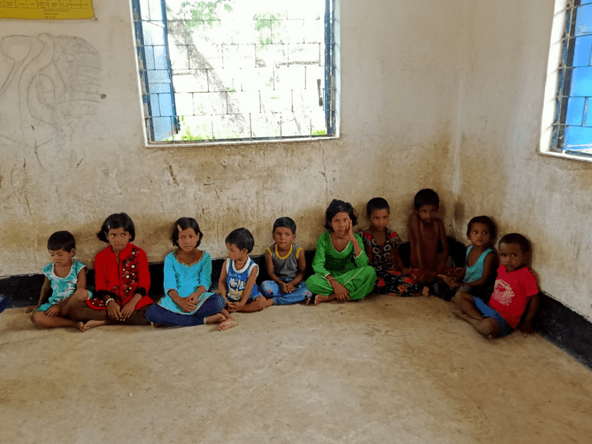
In the month of August in 2019, I Visited Chatra District in Jharkhand, experiencing the dynamic aspects of life there which certainly made me feel, something is not right! Chatra is one of the thirty-five Left wing extremism affected districts listed by NITI Aayog under its Aspirational Districts Program (ADP). One need not be a genius to diagnose the problem. I went to the various state institutions like public schools, health centres, aanganwadis, Panchayat Bhavan etc. of the district and also interacted with the families living there. I realized various issue like malnutrition, poor education, insufficient income, inferior health facilities and top of all the poor convergence of government schemes there.
As part of my field visit, I had an interaction with the children, farmers, labourers, women, elderly people, and local officials but one thing I found in common among all of them was their expression of resentment toward local officials and an expression of aspiration toward the cities at the same time. The existing conditions of their village and the fascinating skylines of the cities has led them to conclude that moving toward the cities is the solution for all their problems.
The state is almost invisible in their thoughts, if not in their everyday lives. Even if they try to visualize the state in their daily lives, they see it in a very negative way, making it responsible for all their problems. They are devoid of even the basic necessities of life: Food, shelter and cloth. I found them hardly sustaining their lives.
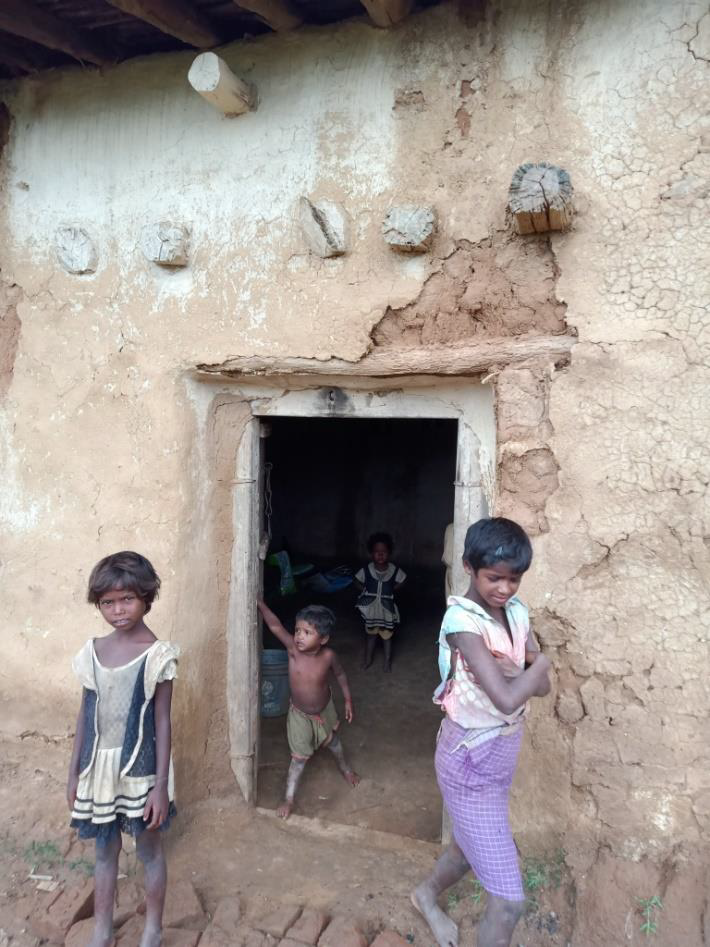
This picture itself reflects the existing situation there in the villages. Although there were a lack of proper food, housing, cloth and education, still the smiling faces and twinkling eyes of these children reflects their aspirations and willingness to be someone like us. They are unaware of the world outside their village or city, but the state is not unaware of these children living in such conditions. Still it chooses to be a passive spectator there.
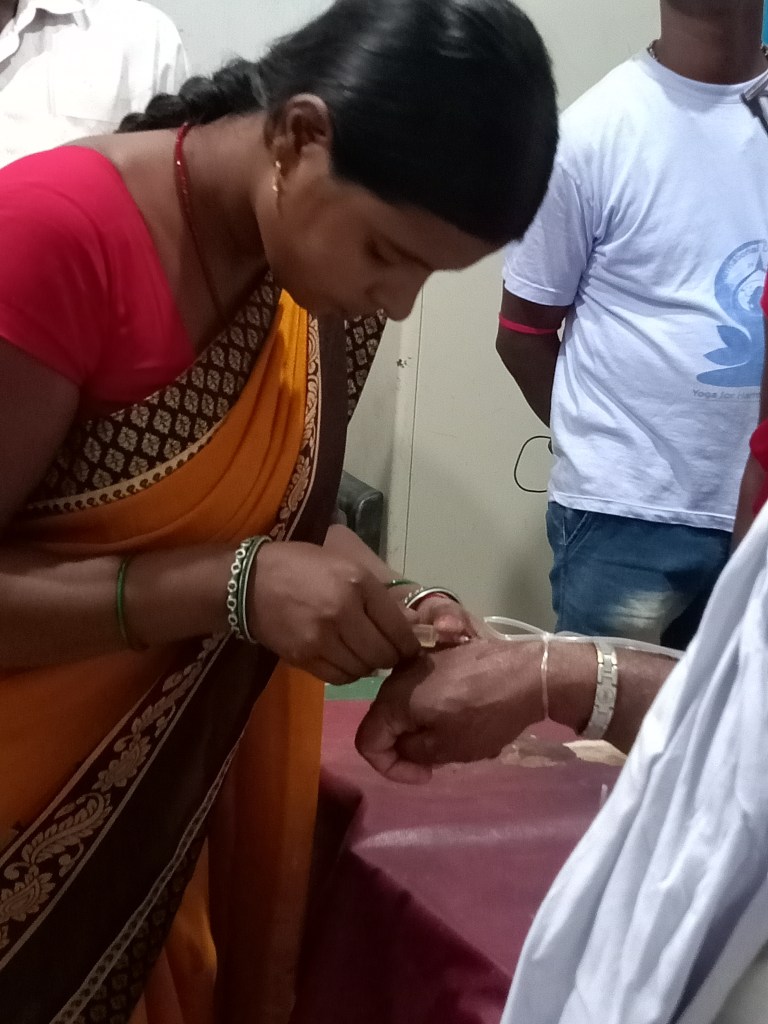
The health facilities were terribly bad, the doctors were unavailable. The patients were severely neglected. The people had to travel miles to go to the city hospitals to avail health facilities. All of them were provided with Ayushman Bharat cards but the utility of which was nearly impossible there. Doctors and nurses were very poorly trained.
“Entering into their dream world”
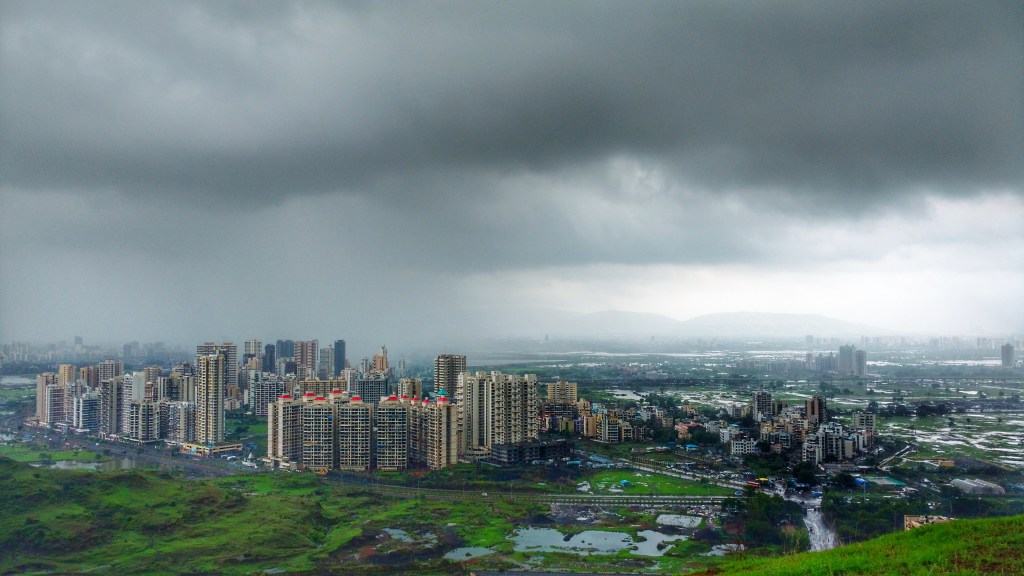
The vision of a city is promising and full of hope. Mumbai in particular has historically been the city for inward migration. It has absorbed everyone coming here with the hope of occupation. The city shows the marvelous success of policies brought in for development. It has constantly replaced itself from the bottom for reaching the new heights. These vibrant and well-planned structures in the cities becomes the dream for everyone to live.
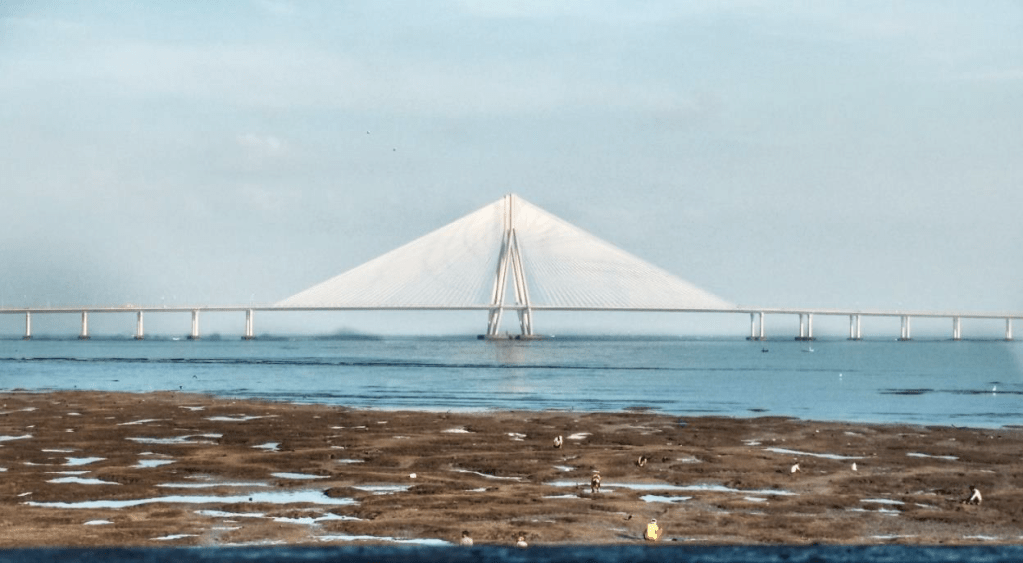
“Is the city actually the city of dreams or just a city of broken hopes?”
The stunning progress of the city will make it an envy for anyone envisioning the paths of development. But when we look at the city from a different perspective, it is then we get to the bottom of this development. (Pun intended)
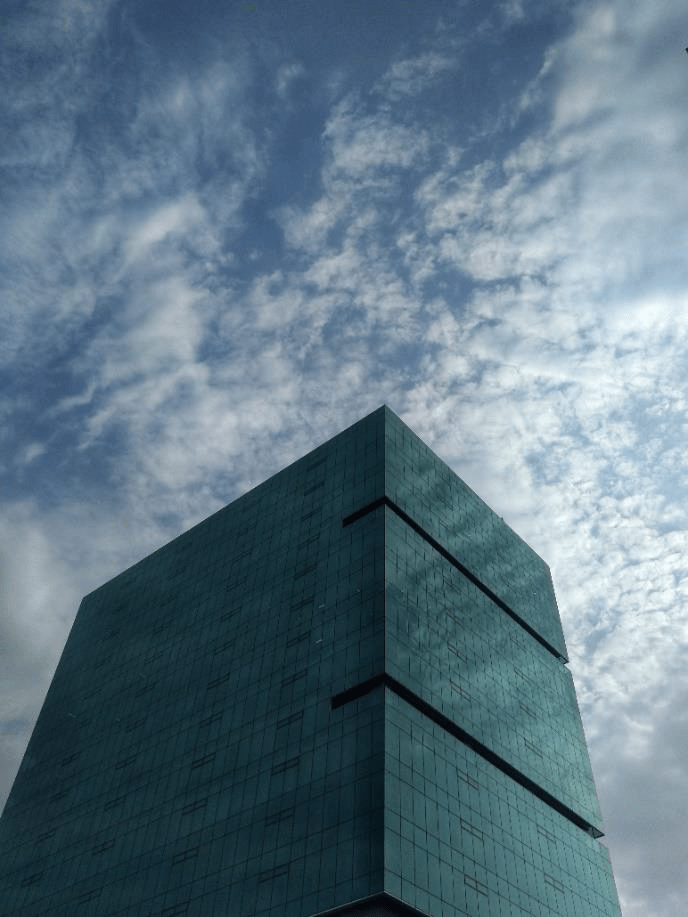
As this city rises to the sky, it changes the realities at the bottom. The dynamics which change at the bottom affect a million lives living here. No one comes here to live in the realities of this city. I find it poetic that from far away, one can only see the tall buildings, just like a mirage, only when we come closer do, we see what lies beneath.
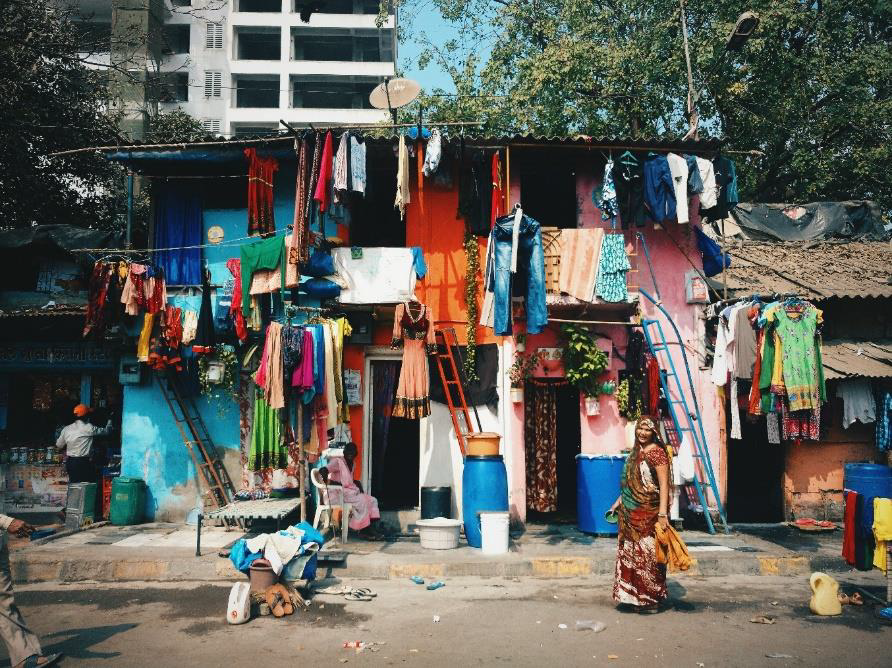
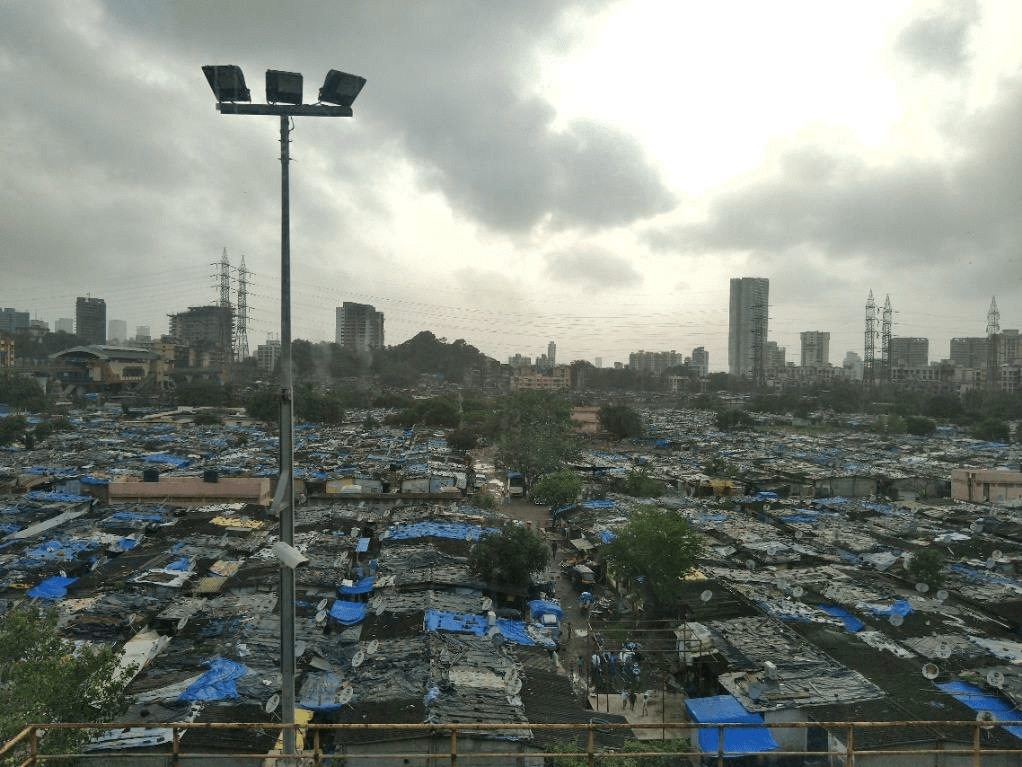
These houses will be destroyed soon to accommodate more skyscrapers.
The poor live in the polar opposite of what is seems like the shining and dazzling Mumbai. The houses in such conditions, the filth so bad, one would question why people even choose to come here. Most of the population lives in houses made on the roadsides, on Bridges, houses made on mud where water gets filled every rain. The poor quality of education in the villages is replaced by good quality of expensive schools in the city. Making it unaffordable for the poor and many middle classes alike. The health facilities have the same story. Either poor or inaccessibly expensive. There is no in-between.
Once in a while, the state does choose to regulate the housings in the city, the poor get government made houses with it. Isn’t it the benevolence of the state? Not really, the houses are made just to replace the poor to make more space for the rising city. When these houses are promised, tall claims are made, number of facilities are promised. Sometime the threat of getting declared illegal is enough. When the father of those kids came to Mumbai, the kids would imagine an optimism of a better future. An optimism which would be conflicting with the pessimism and cynicism they are living with.
Keeping this all aside, people come here for jobs and earning. The cities once grew so fast that it was welcoming everyone. Now with all the services taken up by the newly emerged platforms where you need a local house address to get enrolled, a level of education necessary to function and a steep competition, what a migrant is left with is just their physical labour. The role of state is to accommodate everyone equally. Formal labour availability is being reduced. The policies brought in for the spectacular developmental landscape every time comes with a cost. It has costed the homes and spaces for the hard-working migrant labour. It has costed health care for the poor; it has costed occupation for anyone who isn’t qualified according to the policies of the state.
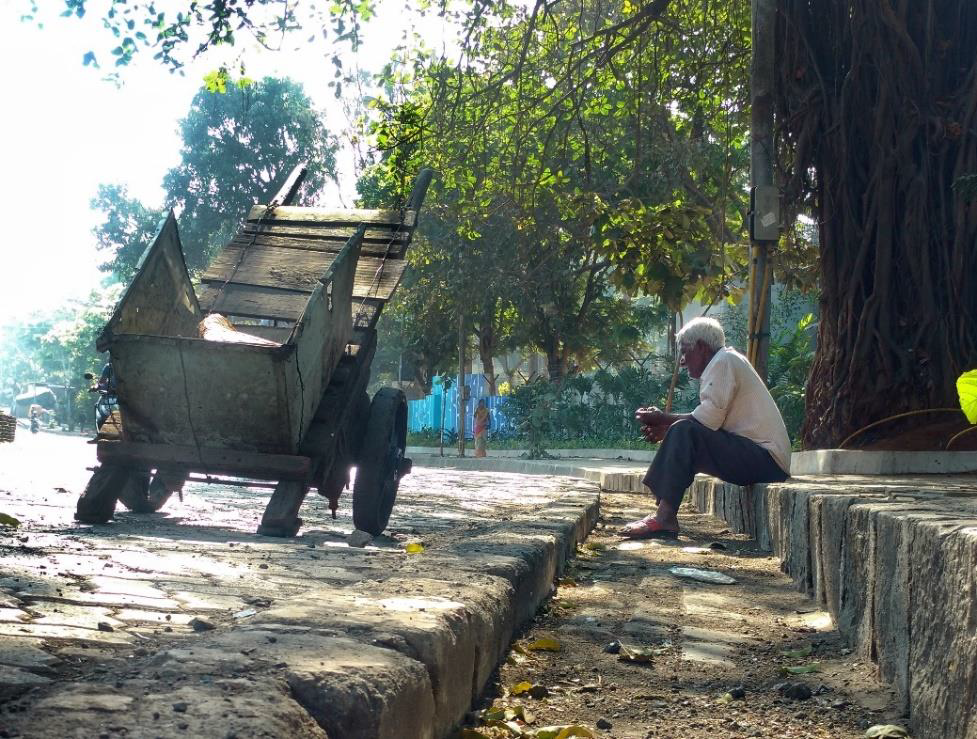
The State which failed in bringing development in Chatra failed again here in the cities when it creates spectacles of development like in Mumbai. The result of which is, a desperate labourer who fights cynicism and pessimism in his Village can successfully managed to cross a horizontal distance of 2000 km to reach this city, but would never be able to cross the vertical distance this city is growing to. Although the relation of the state with these people remains constant, but now it appears with a new face. “What was before inaccessible for them, have now become unaffordable.”
 The Silly Season